54. Landsat 8 false color examples#
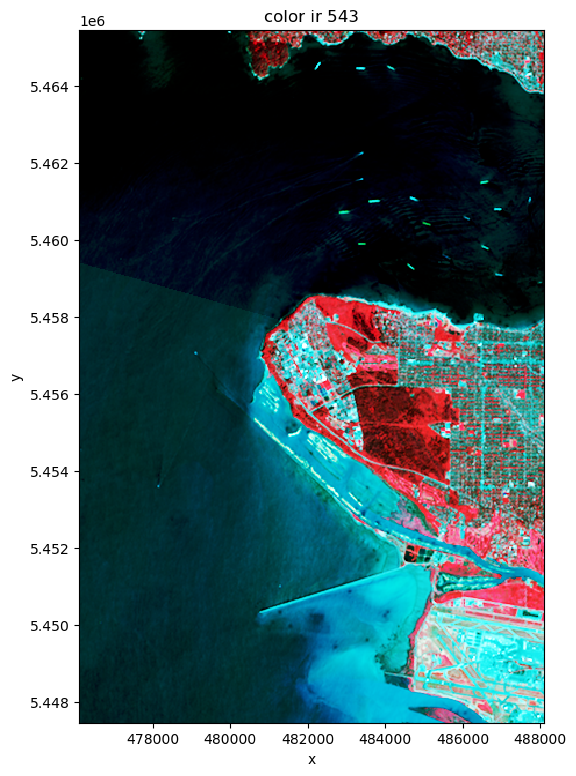
In the Making color composite (“false color”) images notebook we showed how to make a false color composite with Landsat 8 bands 5, 4, 3 mapped to red, blue and green (color infrared)
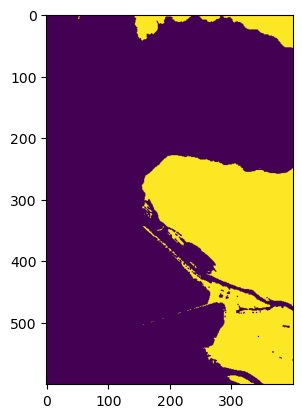
In this notebook we move that code into a function called make_false_color, and show a Vancouver scene with some different band combinations. We make use of a boolean mask to get a stretched histogram using
skimage.exposure that only calculates the stretched histogram for cloud-free pixels over land.
The make_false_color function takes an xarray.Dataset containing an fmask and all the Landsat bands
and returns a false color rioxarray.DataArray containing a [3,nrows,ncols] array with the stacked bands.
New functions:
54.1. Installation#
Download false_color_examples.ipynb from the week 10 folder
Download the week10 tif files from
satdata/landsat/vancouver_2023/week10and move them to `~/repos/a301/satdata/landsat/week10/
import xarray
import rioxarray
from matplotlib import pyplot as plt
import numpy as np
from skimage import exposure, img_as_ubyte
from IPython.display import Image
from pathlib import Path
from numpy.typing import NDArray
54.2. Understanding Landsat band location#
The figure below shows average reflectances for various surface types. Compare some of thse reflectance values with the landsat band locations in microns
coastal aerosol: 0.44
blue: 0.47
green: 0.55
red: 0.65
near-ir: 0.86
swir1 1.6
swir2: 2.2
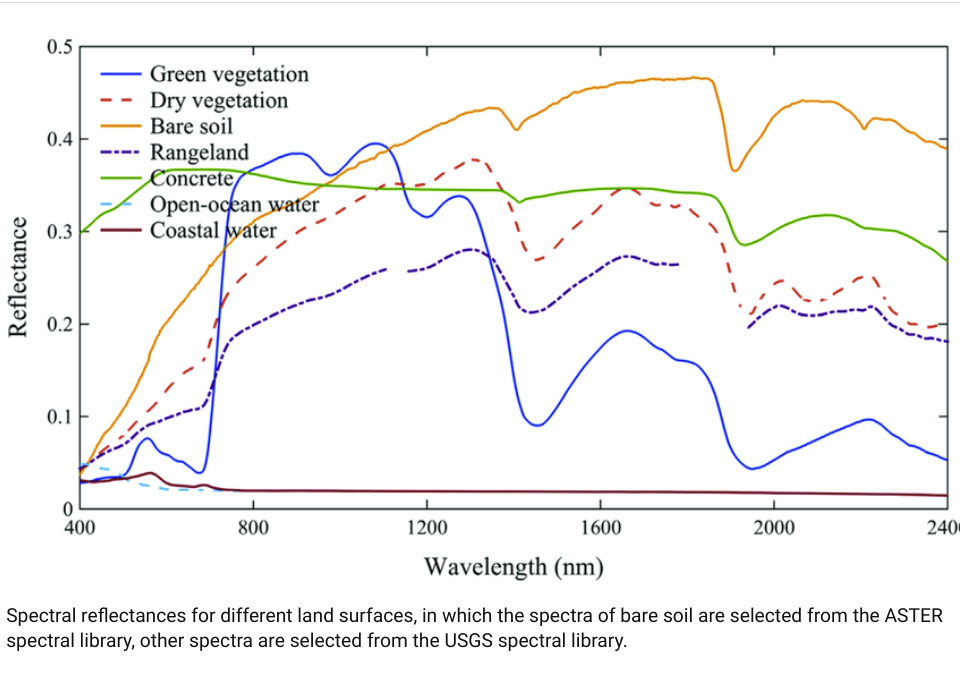
Fig. 54.1 Reflectance spectra#
54.3. Landsat bands by surface type#
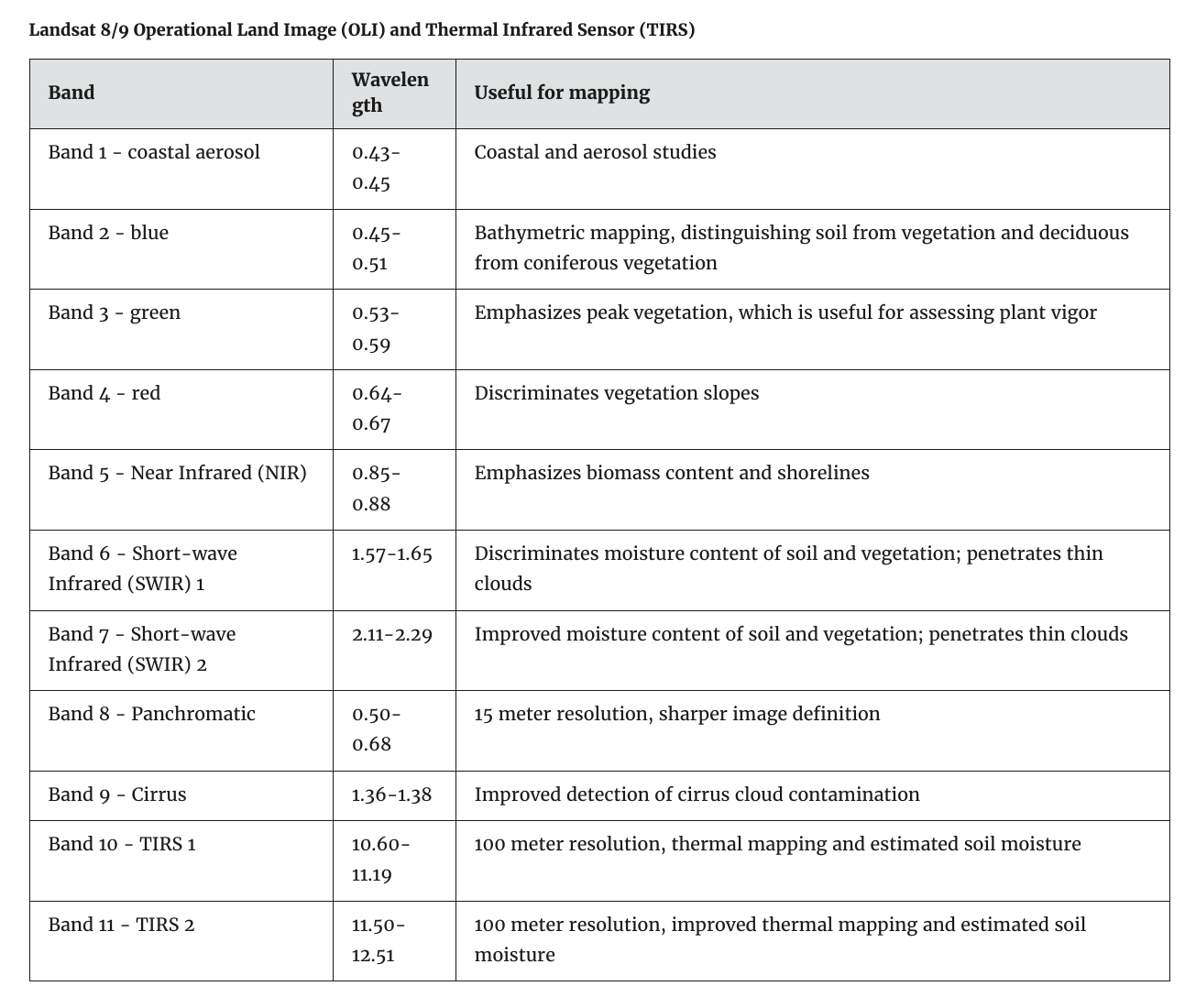
Fig. 54.2 Landsat 8 band wavelengths#
54.4. Landsat false color combinations#
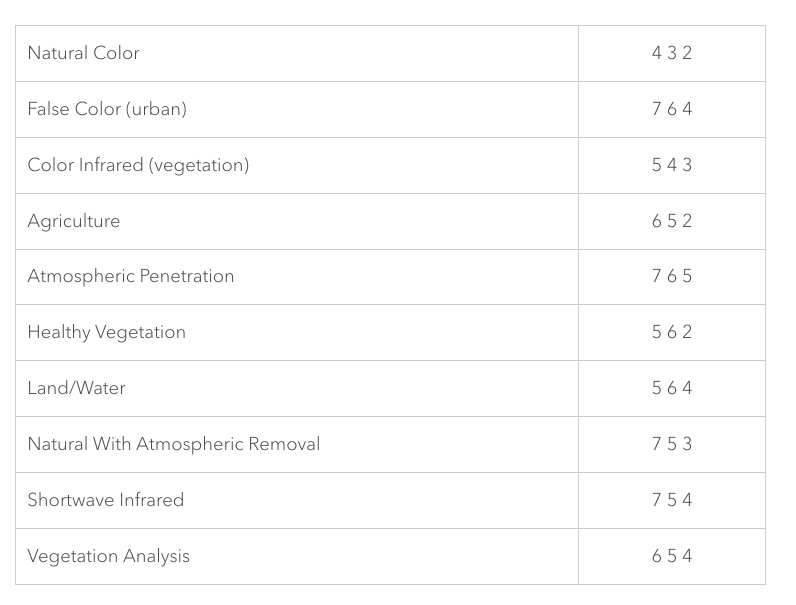
54.4.1. Specific examples#
see this website for images that demonstrate the combinations
see this goes2go demo for mulitple GOES band combinations
54.5. False color bands for Vancouver#
bands={'B01':'Coastal_Aerosol',
        'B02':'Blue',
        'B03':'Green',
        'B04':'Red',
        'B05':'NIR',
        'B06':'SWIR1',
        'B07':'SWIR2',
        'B09':'Cirrus',
        'B10':'TIRS1',
        'B11':'TIRS2',
        'fmask':'fmask'}
54.5.1. Read all bands into a dictionary#
Use the bands dictionary to identify the band by its name (Blue, Green, etc)
and store it in scene_dict. Masking fmask would convert it from 8 bit to float, so we
need to special-case the fmask file.
data_dir = Path().home() / 'repos/a301/satdata/landsat'
all_tifs = list(data_dir.glob('**/week10*clipped_*.tif'))
scene_dict = {}
for key,bandname in bands.items():
    band_tif = None
    for the_tif in all_tifs:
        if str(the_tif).find(bandname) > -1:
            print(f"reading {key}:{the_tif}")
            if key == 'fmask':
                scene_dict[key] = rioxarray.open_rasterio(the_tif)
            else:
                scene_dict[key] = rioxarray.open_rasterio(the_tif, mask_and_scale=True)
            continue
reading B01:/Users/phil/repos/a301/satdata/landsat/vancouver_2023/week10/week10_clipped_Coastal_Aerosol.tif
reading B02:/Users/phil/repos/a301/satdata/landsat/vancouver_2023/week10/week10_clipped_Blue.tif
reading B03:/Users/phil/repos/a301/satdata/landsat/vancouver_2023/week10/week10_clipped_Green.tif
reading B04:/Users/phil/repos/a301/satdata/landsat/vancouver_2023/week10/week10_clipped_Red.tif
reading B05:/Users/phil/repos/a301/satdata/landsat/vancouver_2023/week10/week10_clipped_NIR.tif
reading B06:/Users/phil/repos/a301/satdata/landsat/vancouver_2023/week10/week10_clipped_SWIR1.tif
reading B07:/Users/phil/repos/a301/satdata/landsat/vancouver_2023/week10/week10_clipped_SWIR2.tif
reading B09:/Users/phil/repos/a301/satdata/landsat/vancouver_2023/week10/week10_clipped_Cirrus.tif
reading B10:/Users/phil/repos/a301/satdata/landsat/vancouver_2023/week10/week10_clipped_TIRS1.tif
reading B11:/Users/phil/repos/a301/satdata/landsat/vancouver_2023/week10/week10_clipped_TIRS2.tif
reading fmask:/Users/phil/repos/a301/satdata/landsat/vancouver_2023/week10/week10_clipped_fmask.tif
54.5.2. Create an xarray dataset from the band dictionary#
54.5.2.1. make_dataset function#
def make_dataset(
      scene_dict: dict)-> xarray.Dataset:
    """
    given a dictionary with landsat bands stored as rioxarray, keyed by
    the band name, return an rioxarray dataset containing all the bands
    plus metadata

    Parameters
    ----------

    scene_dict: dictionary with keys like 'B03'

    Returns
    -------

    ds_allbands: xarray dataset with all bands from the dictionary stored as variables

    """
    the_keys=list(scene_dict.keys())
    first_band=the_keys[0]
    ds_allbands = xarray.Dataset(data_vars=scene_dict,
               coords=scene_dict[first_band].coords,attrs=scene_dict[first_band].attrs)
    return ds_allbands
ds_allbands = make_dataset(scene_dict)
ds_allbands
<xarray.Dataset> Size: 10MB
Dimensions:      (band: 1, x: 400, y: 600)
Coordinates:
  * band         (band) int64 8B 1
  * x            (x) float64 3kB 4.761e+05 4.761e+05 ... 4.881e+05 4.881e+05
  * y            (y) float64 5kB 5.465e+06 5.465e+06 ... 5.448e+06 5.447e+06
    spatial_ref  int64 8B 0
Data variables:
    B01          (band, y, x) float32 960kB ...
    B02          (band, y, x) float32 960kB ...
    B03          (band, y, x) float32 960kB ...
    B04          (band, y, x) float32 960kB ...
    B05          (band, y, x) float32 960kB ...
    B06          (band, y, x) float32 960kB ...
    B07          (band, y, x) float32 960kB ...
    B09          (band, y, x) float32 960kB ...
    B10          (band, y, x) float32 960kB ...
    B11          (band, y, x) float32 960kB ...
    fmask        (band, y, x) uint8 240kB ...
Attributes: (12/34)
    ACCODE:                    Lasrc; Lasrc
    arop_ave_xshift(meters):   0, 0
    arop_ave_yshift(meters):   0, 0
    arop_ncp:                  0, 0
    arop_rmse(meters):         0, 0
    arop_s2_refimg:            NONE
    ...                        ...
    TIRS_SSM_MODEL:            FINAL; FINAL
    TIRS_SSM_POSITION_STATUS:  ESTIMATED; ESTIMATED
    ULX:                       476100.0
    ULY:                       5465460.0
    USGS_SOFTWARE:             LPGS_16.3.0
AREA_OR_POINT: Area54.5.3. make_bool_mask function#
def make_bool_mask(
      da_fmask:xarray.DataArray
     ) -> NDArray[np.uint8]:
    """'
    turn a Landsat fmask into a boolean 1/0 array where
    cloud-free land pixels are 1 and all other pixels are 0
    For use by skimage.exposure.equalize_hist

    Parameters
    ----------

    da_fmask: the fmask DataArray

    Returns: bool_mask with the same shape
    """
    scene_mask = da_fmask.data
    mask_select =  0b00100011  #find water (bit 5), cloud (bit 1) , cirrus (bit 0)
    ref_mask = np.zeros_like(scene_mask)
    ref_mask[...] = mask_select
    masked_values = np.bitwise_and(scene_mask,ref_mask)
    masked_values[masked_values>0]=1  #cloud or water
    masked_values[masked_values==0]=0 #rest of scene
    #
    # now invert this, writing 1 for 0 and 0 for 1
    # use 9 as a placeholder value
    bool_mask = masked_values[...]
    bool_mask[masked_values==1] = 9
    bool_mask[masked_values==0] = 1
    bool_mask[masked_values==9] = 0
    return bool_mask
bool_image = make_bool_mask(scene_dict['fmask'])
plt.imshow(bool_image.squeeze())
<matplotlib.image.AxesImage at 0x127394ad0>
54.5.4. make_false_color function#
def make_false_color(
        the_ds: xarray.Dataset,
        band_names: list[str]) -> xarray.DataArray:
    """
    given a landsat dataset created with at least an fmask and 3 bands,
    return a histogram-equalized false color image with rgb mapped
    to the bands in the order they appear in the list band_names

    example usage:

    landsat_654 = make_false_color(the_ds,['B06','B05','B04'])

    Parameters
    ----------

    the_ds:
       created by make_dataset -- must contain at least 3 bands and Fmask
    band_names:
       list of strings with the names of the bands to be mapped to red, green and blue

    Returns
    -------

    false_color: rioxarray with shape [3,nrows,ncols] that can be converted to png
    """
    the_ds = the_ds.squeeze()
    rgb_names = ["band_red", "band_green", "band_blue"]
    #
    # dictionary to hold the 3 rgb bands
    #
    scene_dict = dict()
    for the_rgb, the_band in zip(rgb_names, band_names):
        # print(f"{the_rgb=}, {the_band=}")
        scene_dict[the_rgb] = the_ds[the_band]
    crs = the_ds.rio.crs
    transform = the_ds.rio.transform()
    fmask = the_ds["fmask"].data
    bool_mask = make_bool_mask(fmask)
    #
    # histogram equalize the 3 bands
    #
    for key, image in scene_dict.items():
        scene_dict[key] = exposure.equalize_hist(image.data, mask=bool_mask)
    nrows, ncols = bool_mask.shape
    band_values = np.empty([3, nrows, ncols], dtype=np.uint8)
    #
    # convert to 0-255
    #
    for index, key in enumerate(rgb_names):
        stretched = scene_dict[key]
        band_values[index, :, :] = img_as_ubyte(stretched)
    #
    # only keep a subset of the attributes
    #
    keep_attrs = ["cloud_cover", "date", "day", "target_lat", "target_lon"]
    all_attrs = the_ds.attrs
    attr_dict = {key: value for key, value in all_attrs.items() if key in keep_attrs}
    attr_dict["history"] = "written by make_false_color"
    attr_dict["landsat_rgb_bands"] = band_names
    band_nums = [int(item[-1]) for item in band_names]
    coords = {"band": band_nums, "y": the_ds["y"], "x": the_ds["x"]}
    dims = ["band", "y", "x"]
    # print(f"{dims=}")
    # print(f"{band_values.shape=}")
    false_color = xarray.DataArray(
        band_values, coords=coords, dims=dims, attrs=attr_dict
    )
    false_color.rio.write_crs(crs, inplace=True)
    false_color.rio.write_transform(transform, inplace=True)
    return false_color
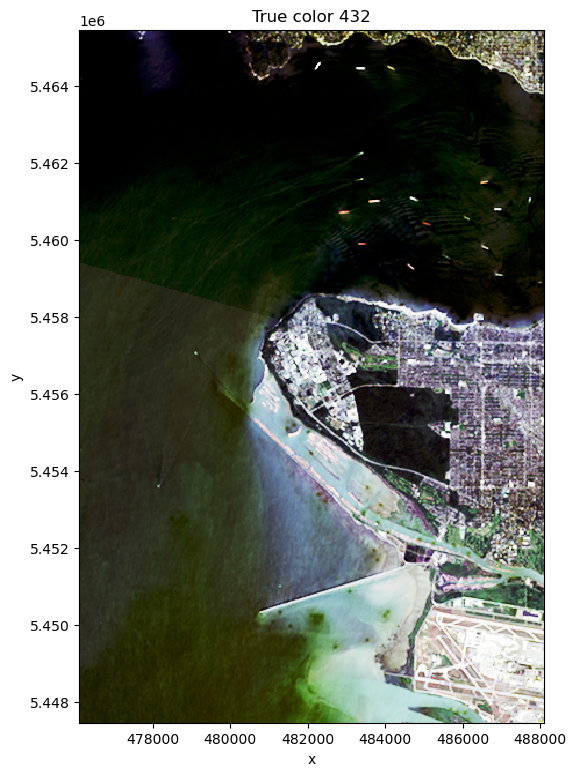
54.6. True color (red, green, blue)#
true_color = make_false_color(ds_allbands, band_names=["B04","B03","B02"])
fig1, ax1 = plt.subplots(1,1,figsize=(6,9))
true_color.plot.imshow(ax=ax1);
ax1.set(title="True color 432");
54.7. Color infrared: near-ir, red, green#
Add the 5-4 red edge for vegetation, plus green (also vegetation). See band543 detail
color_ir = make_false_color(ds_allbands, band_names=["B05","B04","B03"])
fig2, ax2 = plt.subplots(1,1,figsize=(6,9))
color_ir.plot.imshow(ax=ax2);
ax2.set(title="color ir 543");
54.8. Vegetation swir-1, near-ir, red#
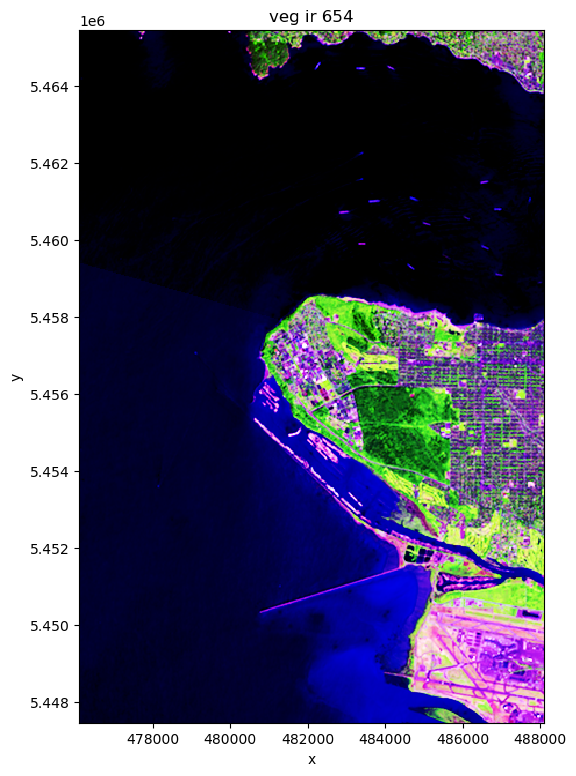
Add swir-1 for moisture content, keep the 5-4 red edge. Less contrast for turbid/fresh water. See band654 detail
veg_ir = make_false_color(ds_allbands, band_names=["B06","B05","B04"])
fig3, ax3 = plt.subplots(1,1,figsize=(6,9))
veg_ir.plot.imshow(ax=ax3);
ax3.set(title="veg ir 654");
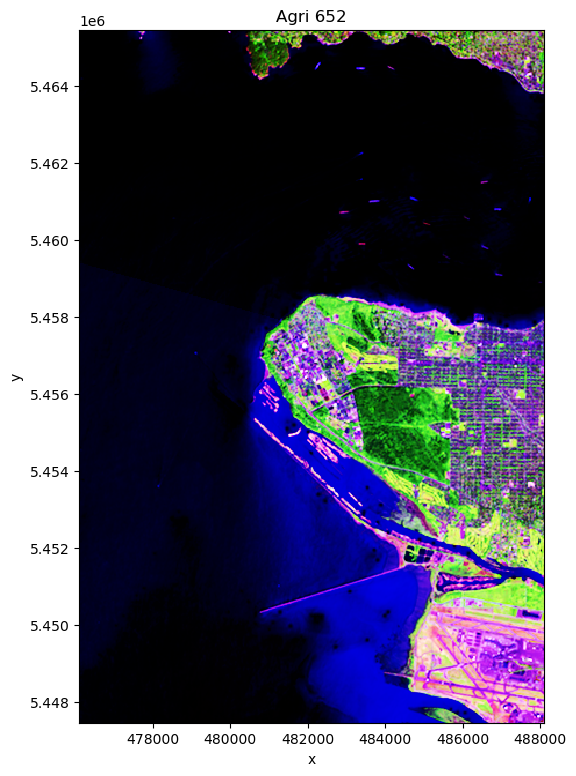
54.9. Agriculture swir-1, near-ir, blue#
Swap out red for blue. See band652 detail
agri = make_false_color(ds_allbands, band_names=["B06","B05","B02"])
fig4, ax4 = plt.subplots(1,1,figsize=(6,9))
agri.plot.imshow(ax=ax4);
ax4.set(title="Agri 652");
54.10. Urban swir-2, swir-1, red#
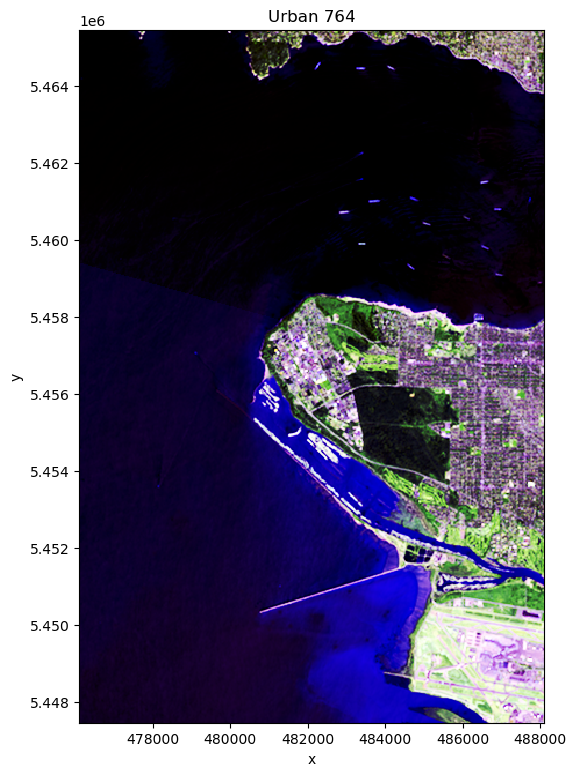
concrete and bare soil have approximately constant reflectivities between 1.6 and 2.2 microns, while vegetation reflects more in swir-1 than swir-2. This combination distinguishes between types of urban development. Less contrast for turbid/fresh water. See: band764 detail
urban = make_false_color(ds_allbands, band_names=["B07","B06","B04"])
fig5, ax5 = plt.subplots(1,1,figsize=(6,9))
urban.plot.imshow(ax=ax5);
ax5.set(title="Urban 764");