21. Kirchoff worksheet#
21.1. Introduction#
In section 4.3.4 on p. 120 Wallace and Hobbs present the following definitions:
The absorptivity, reflectivity and transmissivity are related via conservation of energy. Every photon that arrives in a layer of gas, solid or liquid has to be either absorb, reflected, or transmitted, so:
21.2. Monochromatic emissivity \(\epsilon_\lambda\)#
Kirchoff’s law says that “good absorbers are good emitters” or more exactly:
for any gas, liquid or solid in thermodynamic equilibrium.
To see why this has to be true, consider Fig. 21.1, where a blackbody (surface A) is facing a surface B at the same temperature, with absorptivity and emissivity that violate Kirchoff’s law (there is a vacuum between the two plates).
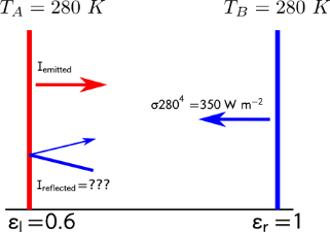
Fig. 21.1 Demonstration of Kirchoff’s law#
21.3. Worksheet question#
Suppose the reflectivity on for wall A is \(\alpha_l =0.7\), so \(\alpha_l \neq \epsilon_l\) and Kirchoff’s law is violated. Find the net flux at wall A if this is true. Why is this physically impossiblea? Note that \(\sigma 280^4\) is a flux, not a radiance, but that doesn’t matter for this proof (why not)?